
Soft Rustic Cottage Bedroom Ideas: 7 Ways to Create a Soulful Retreat
Your bedroom should be the quietest room in the house. In a world that demands constant attention, a rustic cottage bedroom offers something different: a place to pause.
This isn’t about following a trend. It is about creating a sanctuary that feels grounded and safe. Whether you are renovating a historic cottage or bringing warmth to a modern build, the principles of modern rustic design remain the same: natural materials, muted tones, and an appreciation for imperfection.
Here are seven ways to design a sleeping space that feels soulful, curated, and undeniably restful.
1. Start with Limewash or Plaster Walls
Standard paint can feel flat and synthetic. To create a room that holds emotion, look to texture. Limewash paint and plaster finishes interact with light in a way that standard matte paint cannot. They add depth and movement to the walls, creating a “cloud-like” softness that instantly calms the nervous system.
Stick to earthy, warm neutrals—think oatmeal, soft sage, or warm stone. These shades retreat into the background, allowing the architecture and furniture to breathe.
Layering your light sources is crucial for setting the mood, a technique that is equally important when styling cozy rustic cottage living rooms.
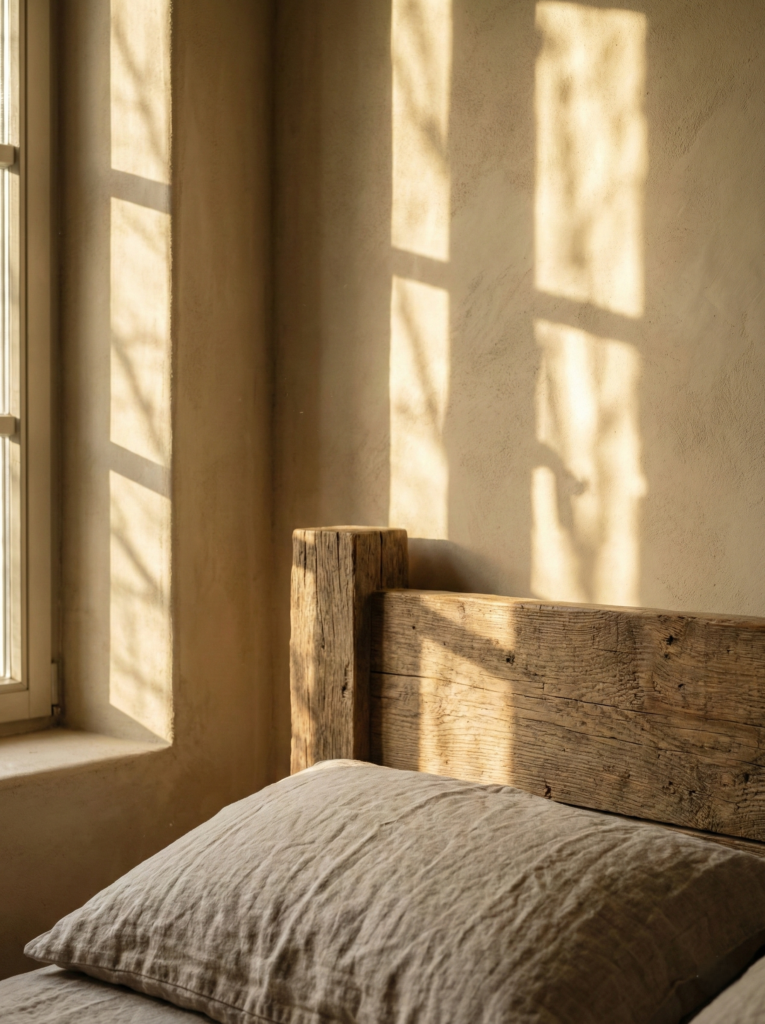
Choosing vintage pieces isn’t just an aesthetic choice; it contributes to a circular economy by extending the lifecycle of furniture.
2. Embrace the “Unfitted” Look for Storage
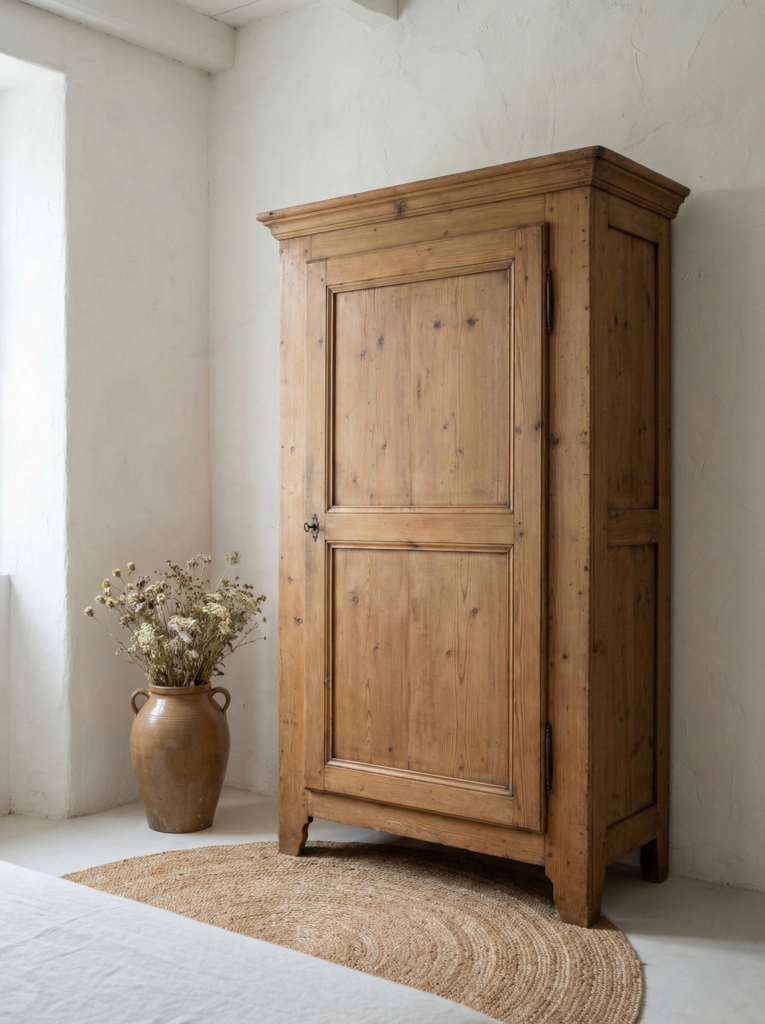
Traditional built-in closets can sometimes make a room feel boxy or modern. The charm of a true cottage lies in “unfitted” furniture—freestanding pieces that feel like they have lived a life before entering your home.
Swap a standard closet for a large antique pine armoire or a vintage linen press. These pieces add height, warmth, and a sense of history that new furniture simply cannot replicate.
3. Layer Natural Linens
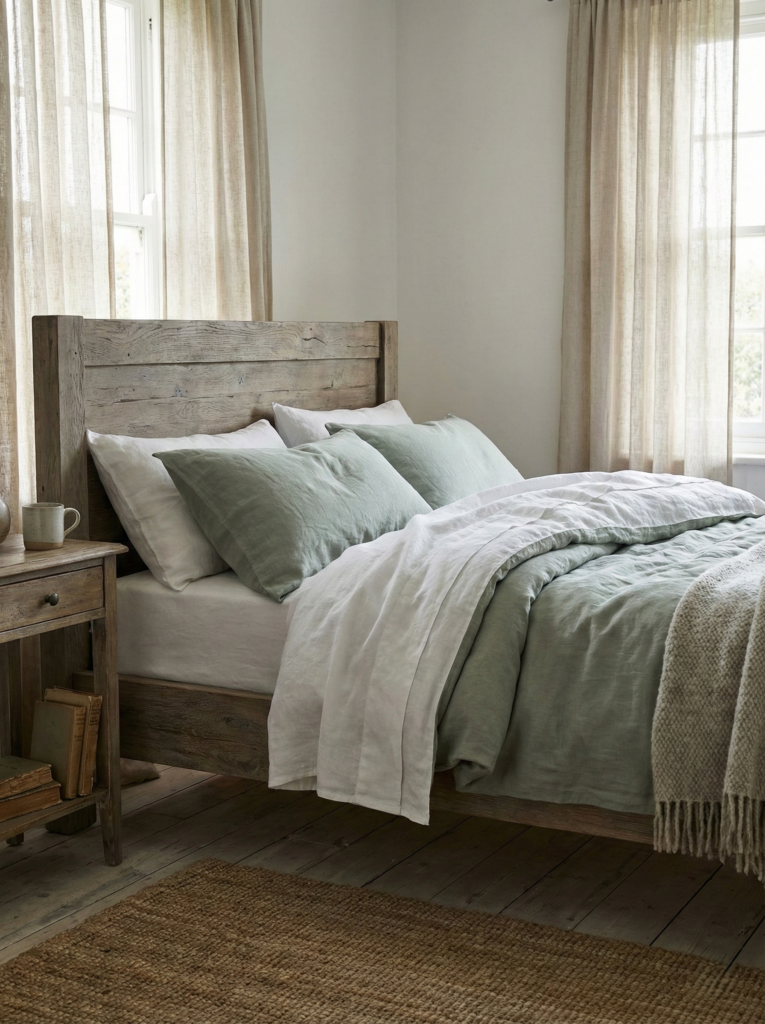
Your bed is the anchor of the room. For a rustic cottage bedroom aesthetic, avoid synthetic fabrics, shiny duvets, or overly stiff bedding. Linen is the material of choice here—it breathes, it softens with age, and its natural wrinkles add to the relaxed, “undone” beauty of the space.
Layering is key. Start with a neutral sheet set, add a heavier duvet in a complementary earth tone (like terracotta or moss), and finish with a wool throw at the foot of the bed.
4. Highlight Architectural Bones
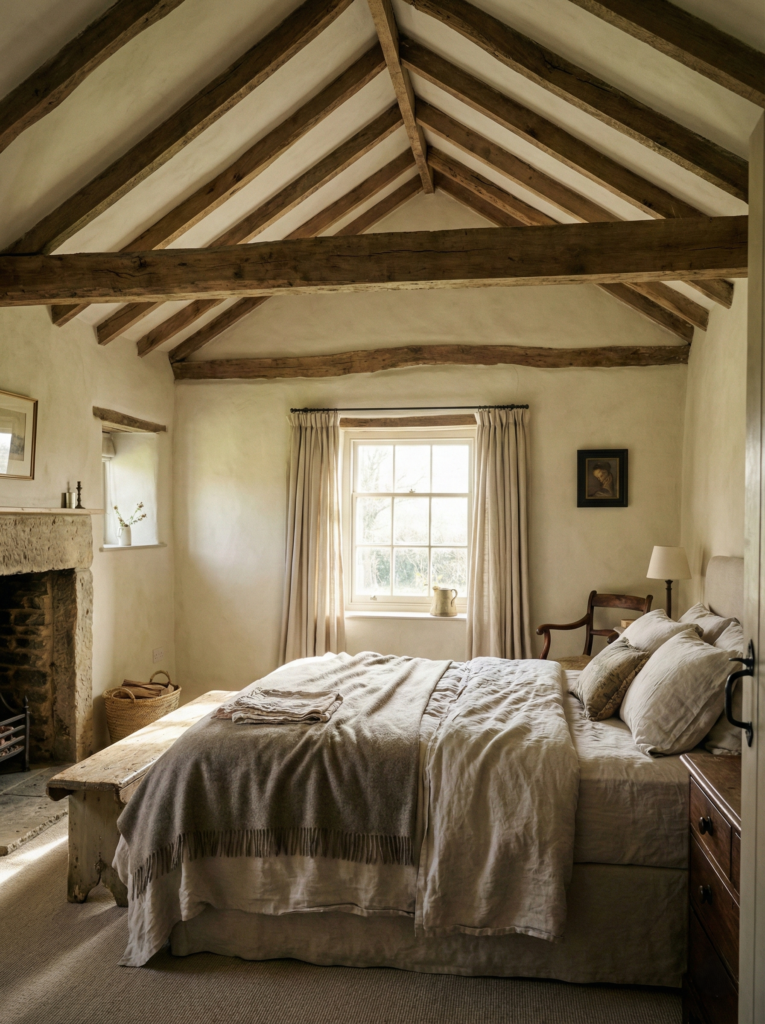
If your home has original features, let them speak. Exposed timber beams are the hallmark of cottage living, offering a connection to the structure of the home. If you don’t have original beams, you can introduce character through tongue-and-groove paneling on the ceiling or behind the bed.
Keep the wood natural or stained in matte finishes. Avoid glossy varnishes, which can make the wood look plastic and ruin the organic feel.
5. Cultivate a Quiet Corner
A bedroom is for more than just sleeping; it is a place to retreat. Even in a small room, try to carve out a nook for reading or reflection.
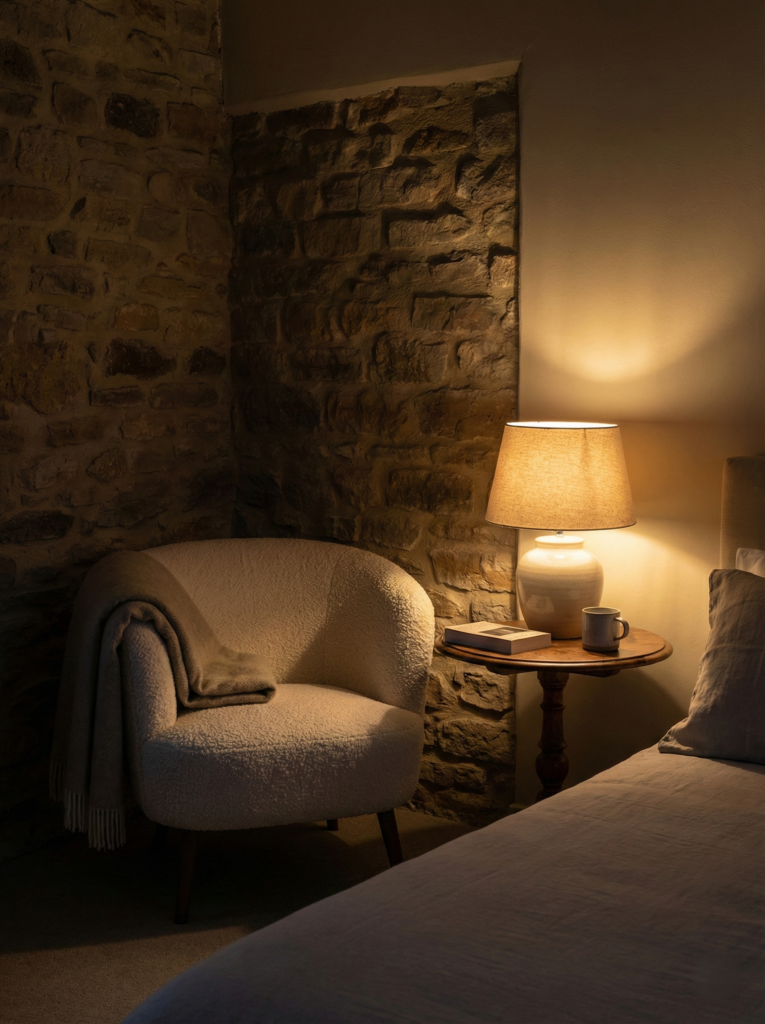
All you need is a comfortable chair—perhaps a boucle armchair or a vintage rocker—and a small side table. This signals that the room is a destination for rest, not just a place to close your eyes.
6. Rethink Your Lighting Plan
Harsh overhead lighting is the enemy of a cozy atmosphere. In a rustic cottage bedroom, lighting should be low, warm, and scattered.
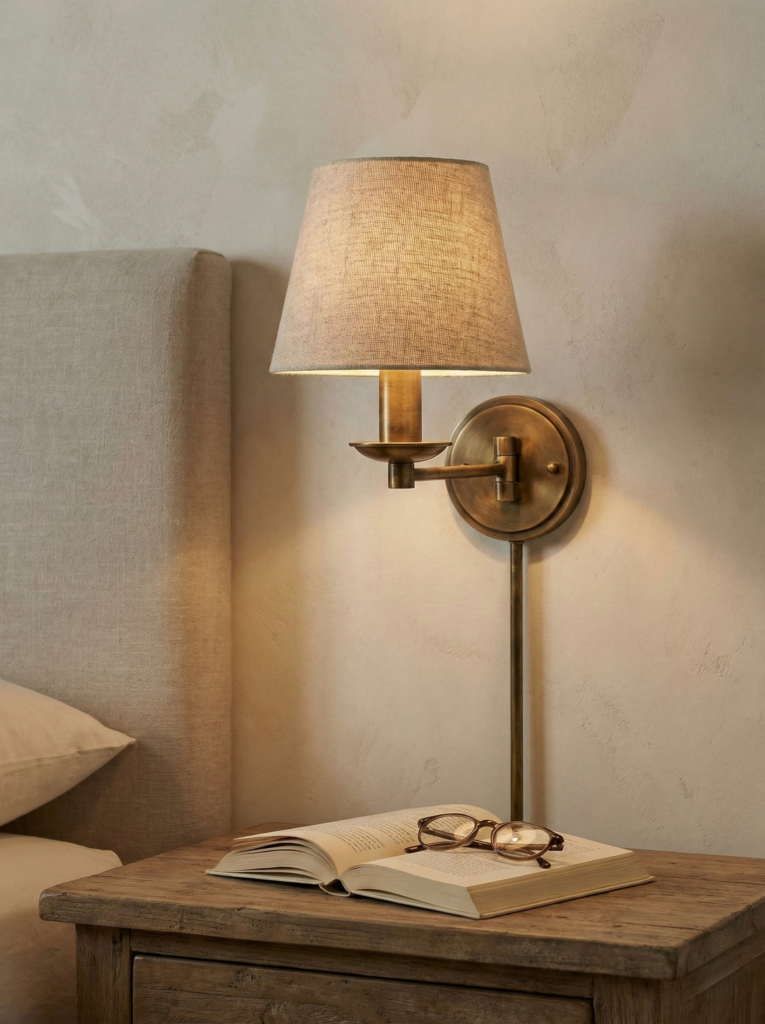
Avoid the “big light” whenever possible. Instead, rely on wall sconces (brass or ceramic work beautifully) and table lamps with linen shades. This creates pools of light that make the room feel intimate and enclosed in the best possible way.
7. Invite Nature In (Biophilic Design)
Finally, a rustic home is always connected to the outdoors. Biophilic design improves sleep quality and reduces stress.
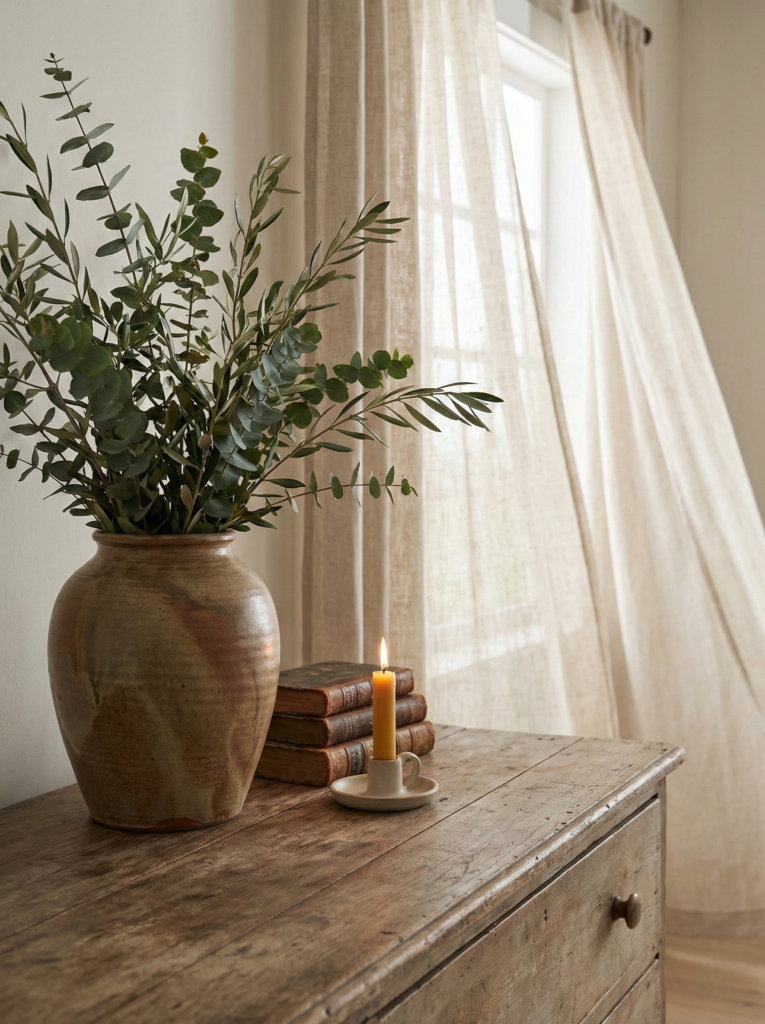
This doesn’t mean turning your room into a greenhouse. A single, sculptural branch in a heavy clay vase, a potted olive tree, or simply keeping the window treatments minimal to frame the view outside can ground the space. Let the seasons dictate the decor.
Final Thoughts
Creating a rustic cottage bedroom isn’t about buying a specific “look.” It is about stripping back the unnecessary and focusing on materials that feel real to the touch. By prioritizing texture, warmth, and light, you create a space that doesn’t just look good—it feels like home.

Ayla Wood
Ayla Wood is a rustic home and decor blogger who curates cabin style, cozy interiors, and warm, nature-inspired design. Her work brings the charm of rustic living into everyday life.

